Broken Spring vs. Worn Spring: How to Tell the Difference
- COMMERCIAL GARAGE DOOR REPAIR
- GARAGE DOOR OPENER INSTALLATION
- GARAGE DOOR SPRING REPAIR
- SAME-DAY GARAGE DOOR REPAIR
- CUSTOM GARAGE DOOR
- GARAGE DOOR OPENER REPAIR
- GARAGE DOOR TRACK REPAIR
- GARAGE DOOR CABLE REPAIR
- GARAGE DOOR PANEL REPAIR
- LOCAL GARAGE DOOR REPAIR
- GARAGE DOOR REPLACEMENT
- NOISY GARAGE DOOR FIX
- GATE REPAIR
- GARAGE DOOR INSTALLATION
- GARAGE DOOR SECTION REPLACEMENT
- OVERHEAD GARAGE DOOR REPAIR
Broken Spring vs. Worn Spring: How to Tell the Difference
You hear a loud bang from the garage, and suddenly your door won’t open. Or maybe your door has been acting strange for weeks, opening slowly and making grinding noises. In both situations, the garage door springs are likely the culprit. But is it a worn spring or a completely broken spring? The distinction is critical for your safety and determining the right course of action. The team at Reynoldsburg Garage Door Repair has seen countless scenarios, and understanding the symptoms helps homeowners know when to call for an immediate emergency service. Distinguishing between a fatigued component and a failed one can prevent further damage to your garage door system.
Key Symptoms to Help You Diagnose the Problem
Telling the difference between a worn spring and a broken one often comes down to observing your garage door’s behavior and performing a few visual checks. While both issues require professional attention, a broken spring presents an immediate operational failure and a significant safety hazard that cannot be ignored. A worn spring, on the other hand, offers warning signs before it fails completely.
Signs of a Worn Spring
A worn spring is one that is nearing the end of its cycle life but has not yet snapped. Its ability to counterbalance the door’s weight has diminished, forcing other components, like the opener motor, to work harder. You can identify a worn spring by looking for a few key indicators.
First, your garage door may feel unusually heavy when you try to lift it manually. With the door disconnected from the opener, you should be able to lift it with one hand, and it should stay in place when you let go. If it feels heavy or slams shut, the springs are losing tension. Another common sign is a slow or jerky opening and closing sequence. Your opener is straining to lift the dead weight that the springs no longer support. You might also notice that the cables on either side of the door appear loose or have come off their drums. This happens because the weakened springs are not providing enough tension to keep them taut. Catching these signs early allows you to schedule a replacement before a complete and often dangerous failure occurs.
Telltale Signs of a Broken Spring
A broken spring is a hard thing to miss. You’ll likely hear a loud, sudden noise from your garage that sounds like a firecracker or gunshot. That’s the spring snapping.
After the noise, your garage door won’t open, even if the motor is running. That’s because the spring, which does the heavy lifting, is broken.
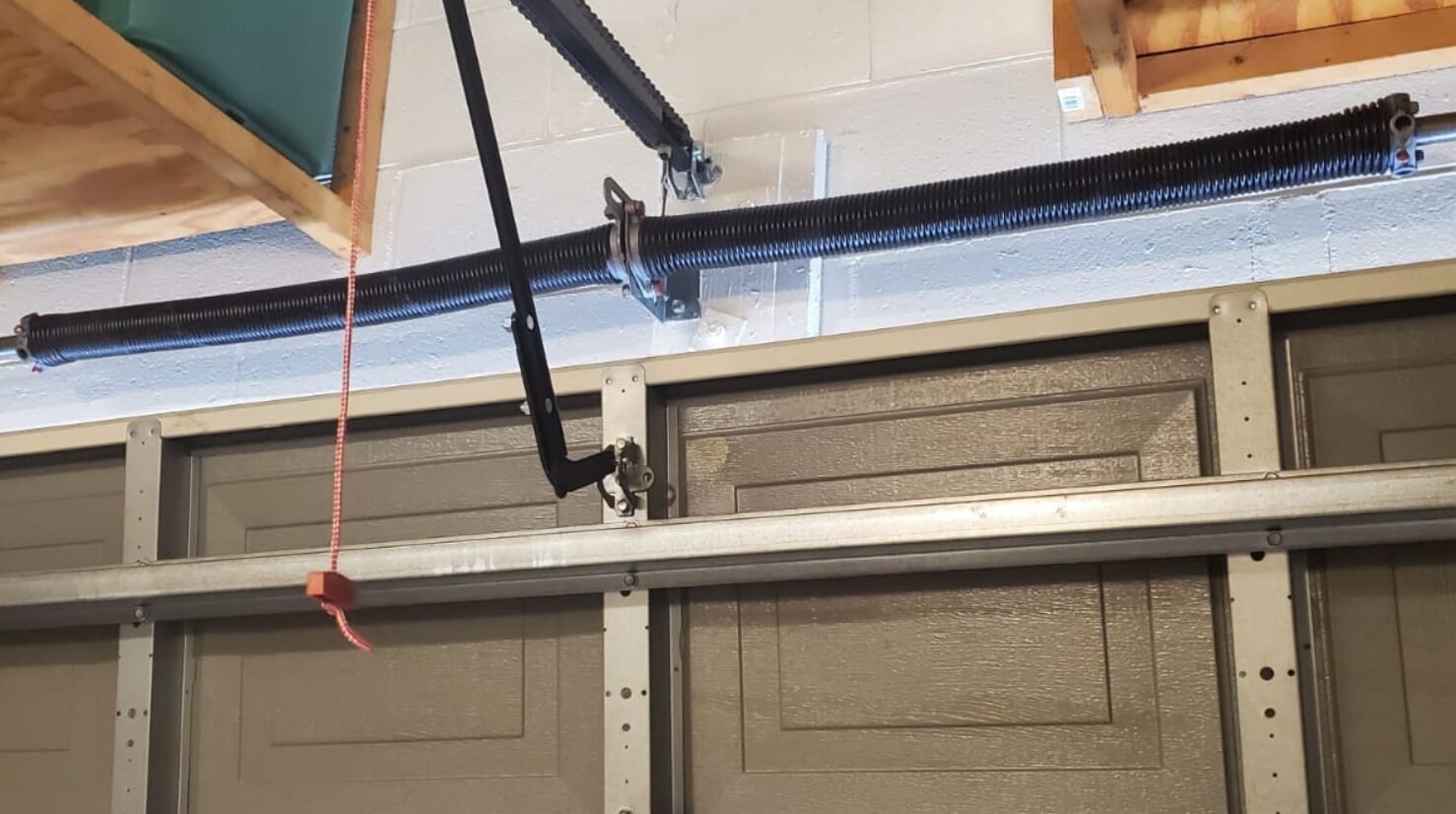
If you look at the spring, you’ll see a clear sign of a break. Torsion springs (located on a bar above the door) will have a noticeable gap in the coil. Extension springs (running along the side tracks) might be dangling or have a snapped cable.
In either case, the door will be too heavy to lift manually, even with the emergency release cord. A broken spring creates a dangerous situation. You should never try to open the door or fix the spring yourself. The safest option is to call a professional from Reynoldsburg Garage Door Repair for an immediate replacement.